Ask Me Anything
random answers available

A well-worn expression tells me…the more I know (learn), the less I know. I cannot find a clear attribution to that bit of wisdom, but it does not really matter. All the hunches point to various men—Aristotle, Socrates, Einstein. Ho hum.
By the time one is here for a few years, so many questions and confusions remain. Keep learning and studying. Practice critical thinking. Simply live the mystery of it all. Keep wondering. Form opinions. Change opinions. Still, there is also a sense of becoming the holder of a great amount of random information, experience and well-wrought truisms.

I was recently standing in my local grocery store looking over packages of beef in search of the grass-fed options when a middle-aged man stopped to ask “Do you bake?” I was somewhat flattered to be asked for my opinion. I am no Betty Crocker, but when he held up a container of half & half and asked:
“Can I use this if a recipe calls for milk?”
I knew what to say since I use half & half with coffee and never buy milk. “Yes, the recipe likely does not call for much, right?”
He nodded and I added “You can even use it on cereal” Of course, nobody needs the extra cholesterol, but now and then is okay. He thanked me and walked away smiling.
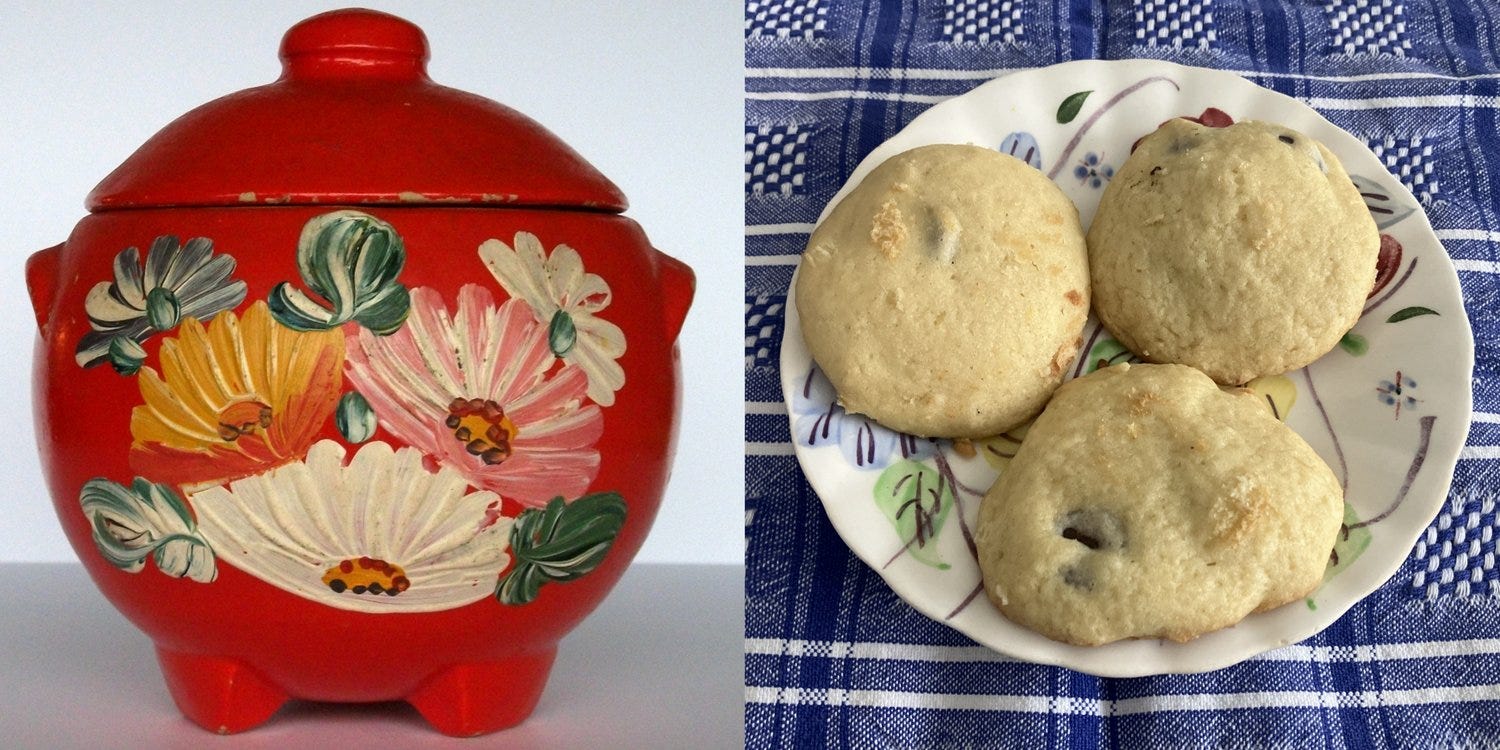
I do have a bit of expertise to know things, such as the family recipe for soft chocolate chip cookies made by my grandmother, a recipe passed down from her German mother. It calls for buttermilk. My grandparents actually drank that in their elder years, but when I made cookies with her, she often used a substitute—a teaspoon of vinegar in a cup of milk. The important step is to allow it to clabber (thicken) by letting it sit for ten minutes.
Beyond the traditional territory of women, life during this political era stirs up an abundance of things to ponder and respond to—social media has certainly encouraged many to express opinions. Having a platform helps. Substack, anyone?
A person can build up an overflow of ideas and opinions that need to be openly shared.
That is what art is for.
Beyond a time of political correctness to this historic moment of opinion when words and emotions break open all over the place, I have noticed the trend among many to always get the last word in. At one time, this was interpreted under the old-school label, Know-It-All.
After Rebecca Solnit’s 2008 essay, Men Explain Things to Me, a term mansplaining arose in the lexicon. She comments (2012):
Having the right to show up and speak are basic to survival, to dignity, and to liberty. I’m grateful that, after an early life of being silenced, sometimes violently, I grew up to have a voice, circumstances that will always bind me to the rights of the voiceless.
I do not typically use AI, but when I asked Google “what is the opposite of mansplaining,” I found this list of terms that emphasize respectful communication and collaboration rather than condescension. The focus on listening and guidance is surely something to hope for.
Teach: Engaging in a constructive way to share knowledge.
Collaborate: Working together in a respectful manner.
Seek growth: Encouraging mutual learning and development.
Isn’t this what we are taught in kindergarten? Mansplaining remains alive and well, but there is also plenty of womansplaining going on. Everybody is explaining.
Trying to make sense is natural.
It is possible to stop, though—at least now and then.
The 1984 Jonathan Demme Talking Heads performance film Stop Making Sense poses the infamous question in the lyrics of a David Byrne/Brian Eno soundtrack cut, Once in a Lifetime.
You may ask yourself, “Well... how did I get here?”
When questions arrive as music, just bathe in it—no need to figure anything out.
~~~~~